F. W. Woolworth Co.
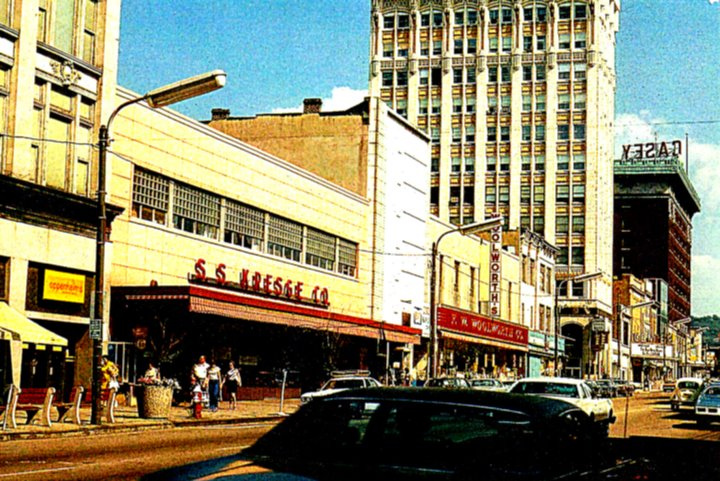
The five-and-dime chain closed in 1997; the surviving company renamed itself after its Foot Locker subsidiary.
The Greensboro lunch counter sits at the center of Woolworth's legacy. On February 1, 1960, young Black students sat down at the whites-only lunch counter at the local Woolworth's and refused to leave, launching a sit-in movement that became central to the civil rights era. That Woolworth's is now a civil rights museum. But that moment was only possible because Woolworth's lunch counters had become such fixtures of American life that challenging segregation there meant challenging the fabric of society itself.
For working people, particularly women, a Woolworth's lunch counter was where you went for a quick meal. Grilled cheese sandwich, Coke, slice of pie. The counters served thousands of people daily across the chain. In Milwaukee, in Chicago, in small towns across Wisconsin, the Woolworth's lunch counter was where you took your break. By mid-century, Woolworth's was one of America's largest retailers. It had stores in the UK, in Europe, in other countries. It was a truly global brand. The American stores carried everything you could imagine: yard goods, hardware, toys, stationery, candy, cosmetics, basic clothing. The stores were densely packed and slightly chaotic. You could spend an hour in a Woolworth's just browsing the weird stuff in the back.
Frank Winfield Woolworth opened his first successful "Great Five Cent Store" in Lancaster, Pennsylvania in 1879, pioneering the fixed-price, open-shelf five-and-dime format that let shoppers handle merchandise themselves. This self-service approach was radical. It meant lower labor costs, faster shopping, and — crucially — the ability to sell more stuff to more people faster. Woolworth's spread across America and abroad and built the Woolworth Building in 1913 — briefly the tallest in the world, paid for in cash. By the early 1900s, there was a Woolworth's in every American town of any size. The stores had a distinctive look: long lunch counters (often segregated in the South), dime stores with surprisingly deep inventories, and the casual browsing aesthetic.
Woolworth built the Woolworth Building in 1913 in Manhattan — a 57-story Gothic skyscraper that was briefly the tallest building in the world. He paid for it with cash, in full, which tells you something about how profitable the five-and-dime business was. The building still stands in lower Manhattan, an ornate monument to the idea that you could get spectacularly rich selling things for a nickel.
Then mall culture arrived. Enclosed shopping centers meant you didn't need to walk down a downtown street to reach a variety store. Department stores and specialty retailers moved to malls. Woolworth's tried to adapt but was stuck with downtown locations and a merchant culture that had been optimized for a different era. Discount retailers like Kmart and Walmart emerged with bigger stores and lower prices. Target arrived with better design and suburban appeal. Woolworth's was squeezed from above and below.
The company tried to modernize. It opened larger stores. It rebranded. Nothing worked. By the 1990s, the writing was on the wall. Woolworth's closed most of its U.S. stores in 1997, liquidating 400+ locations. The company then renamed itself Venator Group and tried to survive through its Foot Locker subsidiary, which was actually successful. But the five-and-dime era was over. The UK Woolworth's, called "Woolies," survived until 2009, outlasting the American parent company. Woolworth's as a category didn't disappear — it evolved into dollar stores and big-box retail. But Woolworth's specifically, with its quirky downtown locations and lunch counters, is gone. The real store, the network of locations where your grandmother shopped for stockings and got a grilled cheese at the lunch counter, is only in memory now.
Known For
- Fixed-price five-and-dime format
- Downtown lunch counters
- The Woolworth Building
- Spun off Foot Locker