Borders
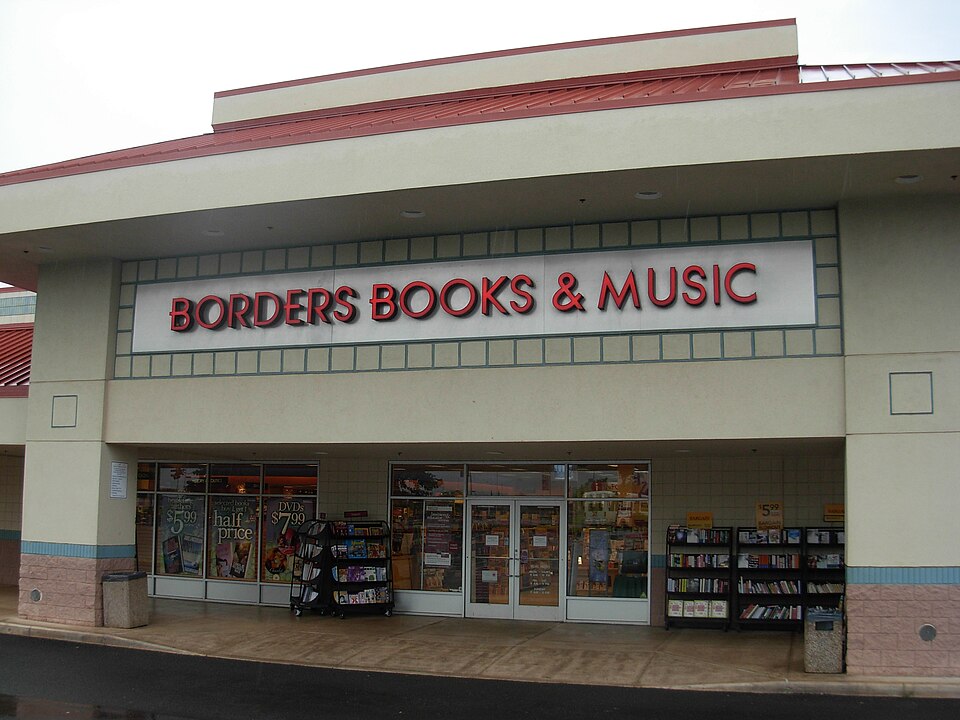
Liquidated all stores in 2011 after filing for bankruptcy.
Borders was supposed to win. Brothers Tom and Louis opened a bookshop in Ann Arbor, Michigan in 1971, and by the 1990s and 2000s, Borders had grown into one of America's largest booksellers, rivaling and often surpassing Barnes & Noble. The stores were designed as destinations: huge inventories (the idea was you could find almost any book in print), in-store cafes, music sections, author events. The superstores felt like clubhouses for readers. You could spend an afternoon browsing, sipping coffee, having a real conversation with staff who actually knew books.
The dream died because of one Internet decision. In 1997, Borders outsourced its website to Amazon. Yes, Borders let Amazon handle their e-commerce. The company was so confident in its retail dominance that it paid Amazon to sell Borders' books online. It was the biggest strategic mistake in retail history. As e-books and Amazon's distribution network became the default way people bought books, Borders was left with expensive store real estate, high overhead, and no meaningful online presence of their own.
The stores themselves were beautiful and frustrating in equal measure. You could browse for hours. The staff often knew books and could recommend. The cafes were places to sit and read or work. Author events drew crowds. Borders felt like a cultural institution, not just a retail space. For book lovers, Borders was the cathedral of reading. But the economics were wrong: stores required foot traffic, real estate cost money, and Amazon could sell books cheaper and deliver them to your door faster than you could drive to the store.
Borders tried to respond by building their online presence, but they were years behind Amazon, and they were fighting the fundamental shift in how people bought books. The company filed for bankruptcy in 2011 and liquidated all stores by 2012. The final Borders closures meant lost gathering spaces for book lovers across America.
What's strange is that bookstores didn't disappear — independent bookstores actually grew in number after Borders failed. Barnes & Noble survived by becoming more selective and creating actual community spaces, not just selling merchandise. Borders failed not because books became obsolete but because the company made catastrophic decisions about e-commerce and then couldn't recover. A beautiful retail space can't compete if your fundamental business model is broken.
Known For
- Large-format book superstores
- In-store cafes and music sections
- Outsourced its website to Amazon